Key information
Main cities: Dar Es Salaam, Tanzania; Nairobi, Kenya.
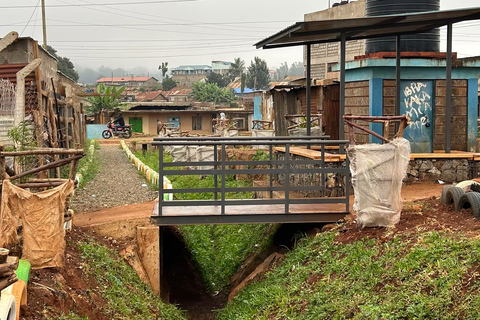
Embu town, Kenya
Scope: Sub-city level
Lead organisations: Centre for Community Initiatives (CCI) ; Kounkuey Design Initiative (KDI)
Timeframe: 2019 – 2025
Themes: Informal settlements; Climate change; Environment; Public space; Resilience and risk reduction; Water and sanitation
Main funder agencies: SwedBio (primary funding); community contributions (~5% of costs: voluntary labour and in-kind materials); Nexon Foundation (in kind); Davis & Shirtliff (in kind); Buro Happold (in kind).
Approaches used in initiative design and implementation:
- Community-led construction using rotational labour models.
- Comprehensive monitoring, evaluation and learning framework for nature-based solutions’ effectiveness in informal settlements.
- Hybrid green-grey systems integration.
- Participatory co-design processes with democratic validation.
- Rivers + People participatory neighbourhood planning methodology.
Initiative description
Background and context
During the rainy seasons in Nairobi and Dar es Salaam, millions experience flooding that threatens homes, livelihoods and lives. Flooding manifests differently across settlements: riverine flooding in riparian zones, surface water accumulation in low-lying areas and overflowing pit latrines during heavy rains. Growing cities across East Africa face escalating climate vulnerabilities, with over 60% of residents living in areas with inadequate drainage infrastructure and rising exposure to extreme weather events (Urban Agenda Platform, 2025).
Nature-based solutions (NbS) – actions to protect, sustainably manage and restore ecosystems while addressing societal challenges – can support climate adaptation. Yet conventional NbS, such as wetlands, urban forests or green roofs, require land, finance and policy support rarely available in informal settlements (WeAdapt, 2025). And NbS frameworks originating in the global North have limited applicability in global South contexts (Diep et al., 2022).
Nairobi and Dar es Salaam exemplify these challenges. In Nairobi, colonial-era planning pushed many settlements into flood-prone riparian areas and peripheries. In Dar es Salaam, rapid unplanned urban expansion has left large areas without basic services or flood protection and over 70% of residents live in informal settlements with little access to formal drainage systems; 2.4 million people experience frequent flooding (Kallergis, nd; Roy et al., 2018; Ouma et al., 2024). Especially vulnerable are low-lying coastal areas and the Msimbazi river basin, where large-scale planning interventions have often prioritised infrastructure over community needs (World Bank, 2019).
A city-systems lens reveals how environmental, institutional and social systems interact to shape urban outcomes. Both cities exhibit institutional fragmentation, with overlapping mandates for water, land use and planning. In Nairobi, weak municipal revenue limits infrastructure investment, and fragmented governance across 17 sub-counties undermines coordinated planning (Tomorrow’s Cities, 2022). Dar es Salaam’s governance is split among five municipal councils with limited revenue-raising powers, creating central dependence that constrains infrastructure investment. In both contexts, traditional grey infrastructure approaches remain inadequate, given resource constraints and scale, while top-down planning often fails to reflect community priorities or build local ownership (Diep et al., 2022).
The Realising urban Nature-based Solutions (ruNbS) project responded to these governance and infrastructure gaps through community-driven adaptation. The focus on flood-risk reduction using nature-based and hybrid infrastructure has also improved water security, biodiversity, public space and livelihood opportunities; testing and evaluating hybrid systems that integrate environmental management with social and economic benefits, and using participatory processes that support community ownership alongside flood protection (ruNbS, 2025; Diep et al., 2022).
Summary of initiative
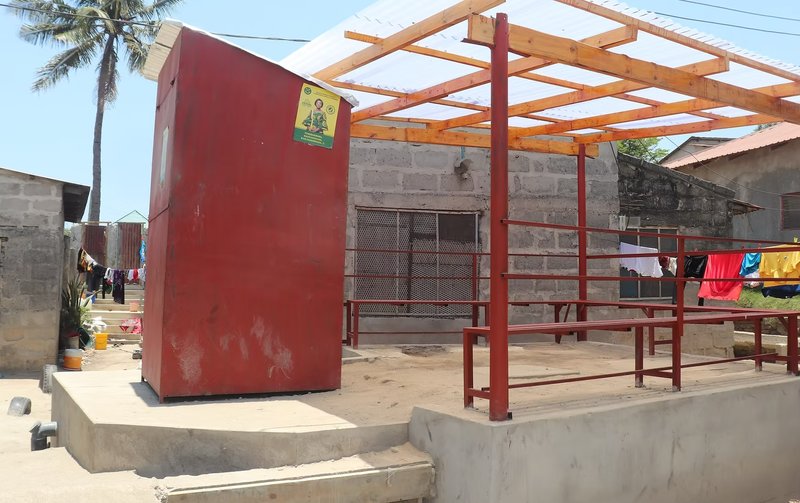
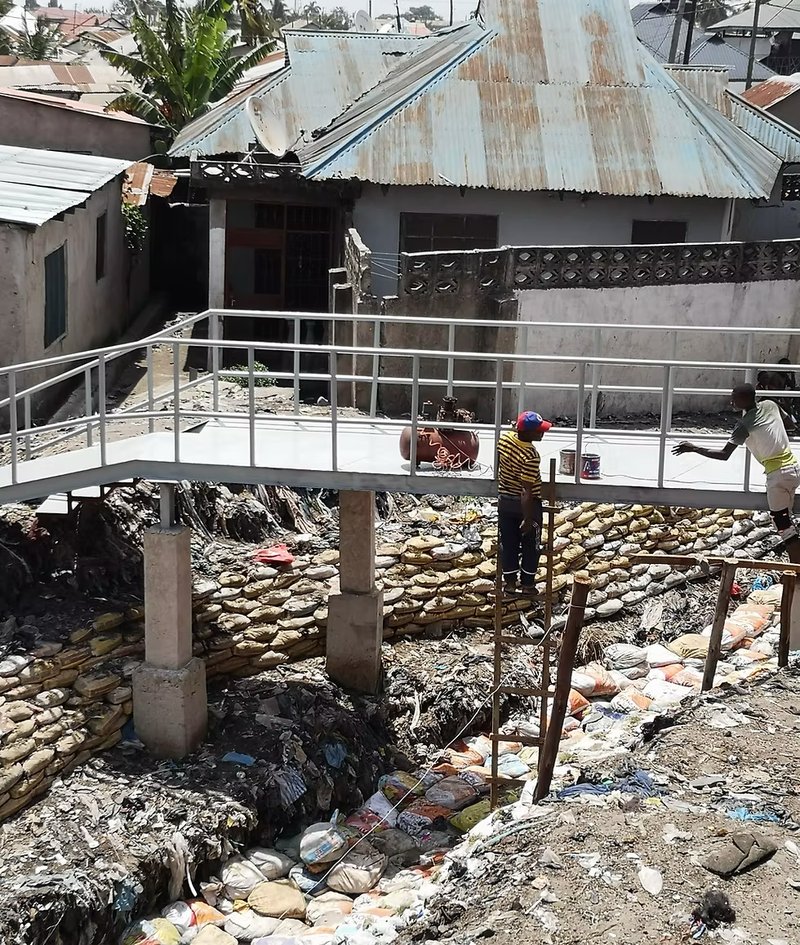
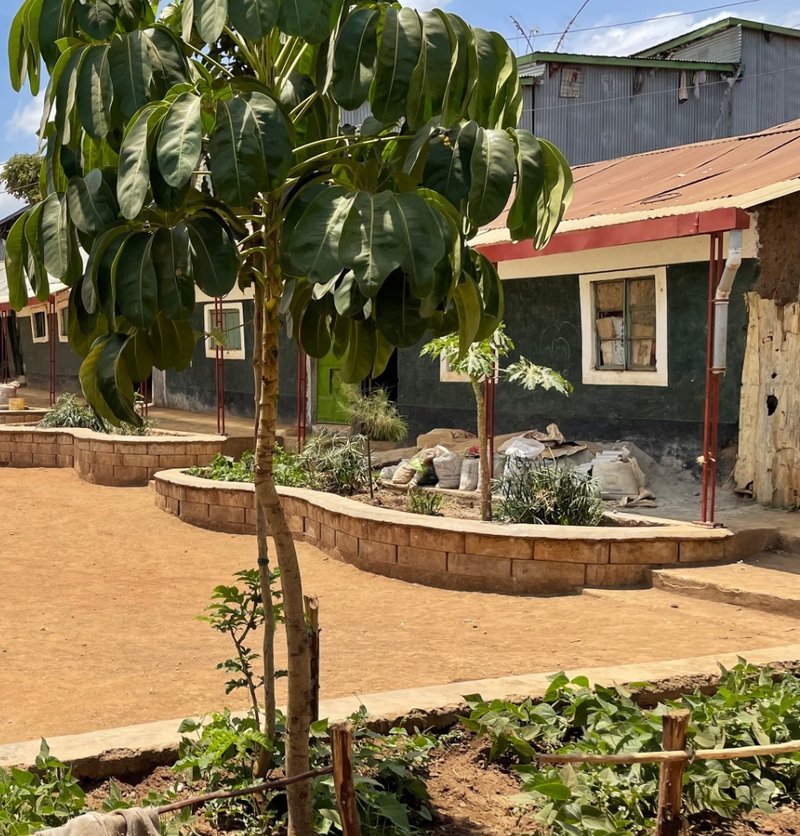
Realising urban Nature-based Solutions (ruNbS) was a six-year (2019-2025) initiative to implement and evaluate community-driven climate adaptation projects in flood-prone informal settlements. Led by Kounkuey Design Initiative (KDI) in Kenya and Centre for Community Initiatives (CCI) in Tanzania, and funded by SwedBio, it delivered hybrid green-grey infrastructure at seven sites across Nairobi, Embu and Dar es Salaam (ruNbS, 2025). The constructed systems at schools, youth facilities and riverfront areas combine “green” aspects like permeable paving, filter drains, planted rain gardens and infiltration tanks with “grey” engineered elements, such as concrete channels and revetments (ruNbS, 2025).
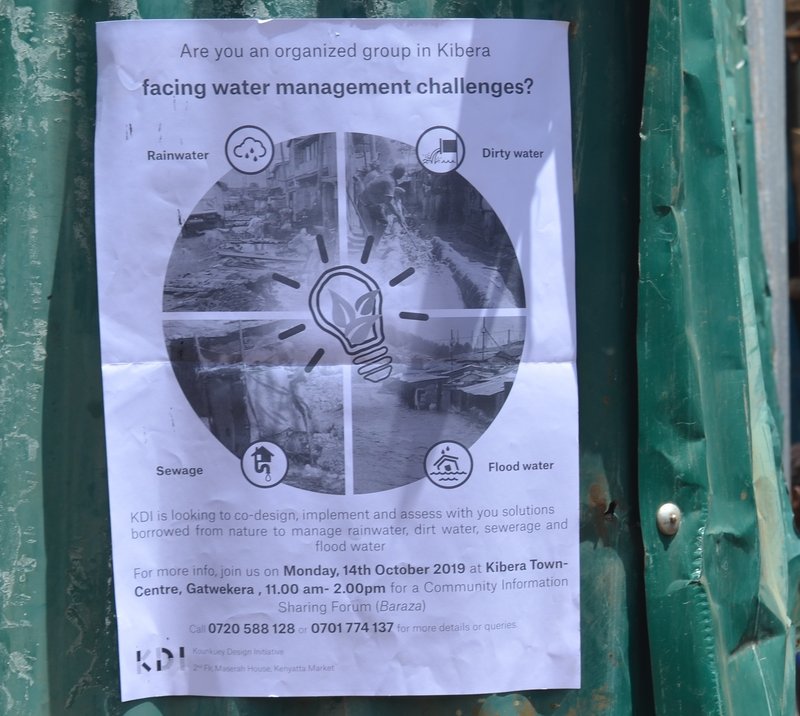
RuNbS builds on CCI’s long experience in community-led upgrading in Tanzania and KDI's experience in Kenya, particularly the Kibera Public Space Project (KPSP) (Dessie et al., 2025). KPSP installed hybrid infrastructure in public spaces, demonstrating viable nature-based engineered solutions in dense riparian contexts (Mulligan et al., 2020). RuNbS drew on this experience to develop a participatory planning methodology called “Rivers and People” (R+P), which integrates technical analysis with community-led visioning and asset mapping, offering an alternative to top-down master planning that has in the past contributed to forced evictions and disrupted social and ecological networks (ruNbS, 2025).
Phased approach
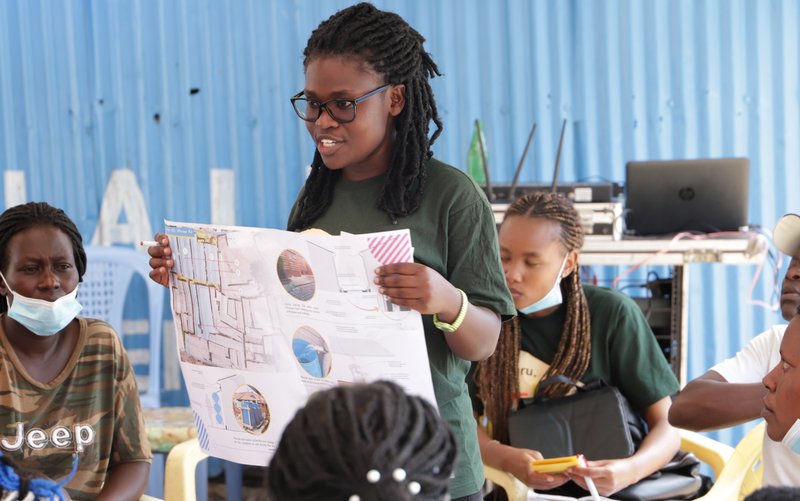
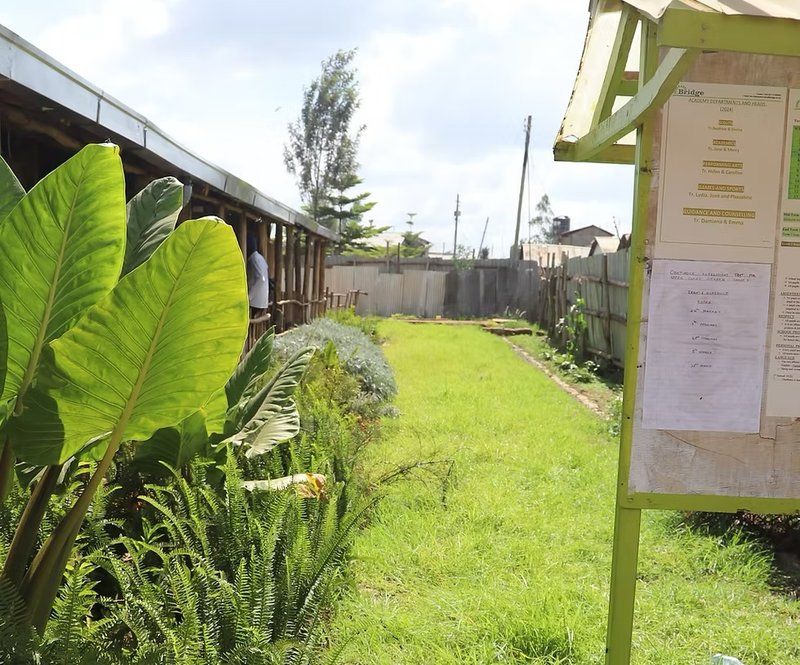
The project unfolded progressively, supporting relationship-building and iterative learning. The first four sites were established in 2019, two in Kibera, Nairobi (St John’s school and VUMA group in Makina Village) and two in Dar es Salaam (Mapinduzi school and Mji Mpya settlement). Later in 2019, a new site at Bridge International Academy in Mukuru Kwa Reuben, Nairobi, tested the model’s adaptability, expanding in 2023 to develop riverbank public space adjacent to the school. The final phase in 2024 tested scalability in secondary urban centres at Dallas Asili public space in Embu town.
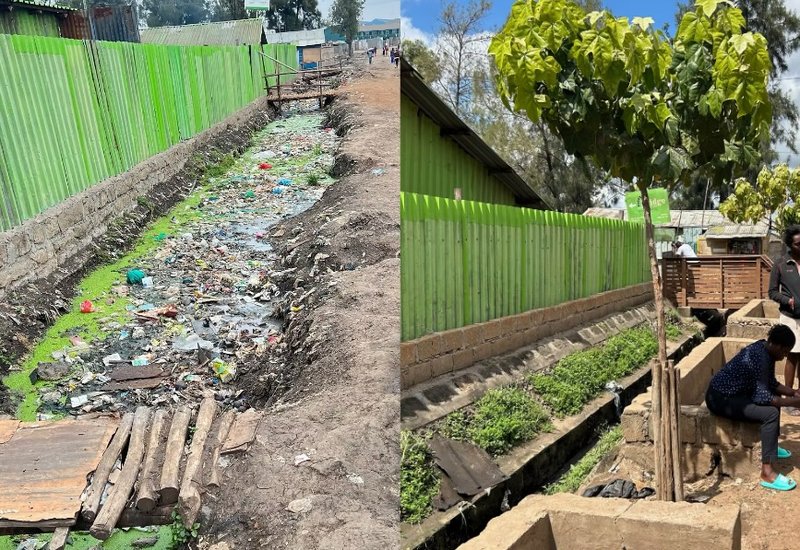
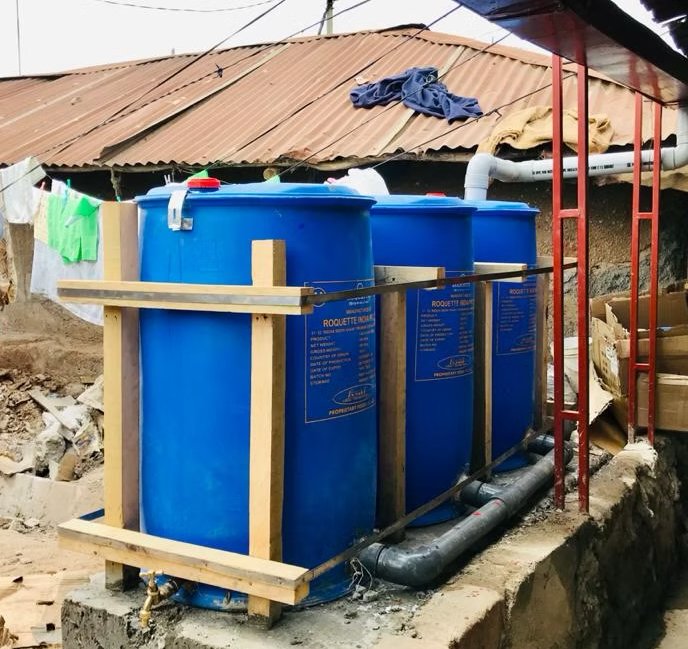
Across different contexts, residents’ priorities were addressed using a range of community-driven NbS solutions. Issues of riverine and surface water flooding, soil erosion, pit latrine overflow, raw sewage discharge, clogged drains and solid waste accumulation were addressed through filter drains, permeable surfacing, infiltration tanks, underground retention structures, rain gardens, rainwater harvesting, riverbank reinforcement and greening, among other solutions.
Construction involved rotational, gender-inclusive community labour. Additional amenities were installed at some sites, such as public space with shaded seating and playgrounds in Mukuru. One Tanzanian site installed a decentralised wastewater treatment system with simplified sewerage and biogas generation. And in Embu town, climate-awareness workshops and clean-up events strengthened longer-term collaboration between community and county authorities.
With construction completed, work in 2025 focused on monitoring outcomes, evaluating NbS performance and strengthening community capacity for long-term operation and maintenance. RuNbS relies on community-led management structures of residents and local CBOs, who are responsible ongoing operation and maintenance. Some sites have been physically connected to municipal drainage systems while retaining community oversight, illustrating how community-led upgrading can interface with state infrastructure systems (Diep et al., 2022; Mulligan et al., 2020). However, without formal municipal adoption, communities continue bearing the burden for managing infrastructure that delivers public benefits.
City and regional engagement
Implementation involved negotiated governance processes to secure permissions and partnerships, while keeping communities central to decision making. Formal memoranda of understanding (MOUs) with Nairobi’s Department of Public Works and direct collaboration in Dar es Salaam with Kinondoni and Ilala municipal departments provided institutional support.
Beyond site-level interventions, ruNbS established a Regional Community of Practice (RCoP) for East Africa to support cross-city learning on hybrid NbS and urban green infrastructure in informal settlements (KDI, 2025).
Financing
A hybrid financing approach combined international funding with community contributions and support from multiple partners across phases and sites. Core funding came from Sida’s 2021-2024 biodiversity programme, managed by SwedBio (SwedBio, 2024). Construction prioritised local employment, with communities also contributing voluntary labour and in-kind materials (Diep et al., 2022; KDI and CCI, 2025). At different sites, technical partnerships provided in-kind support: Nexon Foundation supplied construction materials; Davis & Shirtliff solar water heating systems for institutional facilities; Buro Happold pro bono engineering validation; Living Data Hubs WiFi installation; and the KDI–KEFRI Carpentry Academy skills training (KDI, 2025).
Monitoring, evaluation and learning framework
KPSP insights – such as the recommendation to evaluate drainage performance alongside participatory-process impacts – have shaped RuNbS, which extends this approach with MEL framework designed to support systematic data collection across sites and generate evidence for replication (Mulligan et al., 2020). This aligns with scholarly arguments for small, niche experiments in sustainable urban drainage systems, which can help to navigate political and spatial constraints while building the case for inclusive infrastructure and nature-based innovations at scale (Mguni et al., 2016; 2022).
RuNbS MEL framework emerged from KDI and CCI’s practice, with methodological support from Stockholm Resilience Centre and SwedBio (Diep et al., 2022). By adapting existing NbS assessment approaches for informal settlement conditions, it retains environmental and cost indicators while capturing dimensions that standard frameworks often overlook (governance, participation, justice, livelihoods and public space use) (SwedBio, 2024). It contains 66 indicators across seven domains, with over 700 pre- and post-intervention data points covering qualitative and quantitative dimensions of performance. This represents one of the region’s most thorough datasets on NbS in informal settlements, particularly given its longitudinal design and sustained community engagement.
Qualitative evidence to date reports reduced localised flooding, improved stormwater management and fewer disruptions to school access during heavy rains, and co-benefits like improved water access through rainwater harvesting (Diep et al., 2022). For cost evidence, life-cycle analyses comparing NbS with grey alternatives in Nairobi schools (Nilsson et al., 2024) show how participatory design and context-specific construction shape both upfront and long-term expenditure.
Target population, communities, constituents or "beneficiaries"
RuNbS directly benefits thousands of residents across seven sites and surrounding communities. At school sites, students’ and teachers’ access improved during rainy seasons (Mapinduzi Primary School has 900 students; Bridge International Academy 290). Communities near St John’s school and in Makina Village benefit from reduced flooding and river basin improvements (Diep et al., 2022). In Mji Mpya, an estimated 21,000 residents reported reduced flooding impacts (ruNbS, 2025).
The initiative contributes to wider environmental gains, such as reduced soil erosion, less waste pollution in waterways and more biodiversity in planted areas (KDI, 2024; Diep et al., 2022). Some households also reported cost savings from biogas systems that replace purchased cooking fuel and improved water security through reduced reliance on costly external water sources (ruNbS, 2025).
ACRC themes
The following ACRC domains are relevant (links to ACRC domain pages):
- Informal settlements (primary domain)
- Housing
- Land and connectivity
- Youth and capability development
ACRC’s informal settlements domain emphasises community-led upgrading that improves living conditions without displacement. RuNbS aligns closely, working in four settlements where communities co-design and manage adaptation interventions that reinforce existing social arrangements (KDI, 2025).
The project navigates overlapping land governance involving municipal authorities, landowners and informal brokers. In Kibera, KDI-brokered agreements with local authorities respected existing informal tenure systems, indicating that NbS can operate within current land use patterns without requiring formal titles (KDI, 2025).
Interventions that reduce flooding, improve drainage and create public spaces contribute to a housing agenda by stabilising living conditions. Youth and capability development are supported through construction training, youth group engagement and local employment (KDI, 2025).
The following ACRC crosscutting themes are also relevant (links to ACRC domain pages):
Gender
Both women and men participated as paid labourers in ruNbS construction (Diep et al., 2022). The project emphasised women's participation in construction and management committees, and safeguarded fair participation of women and persons with disabilities in rotational labour models. For example, half of construction workers at St John’s school and Bridge Academy were women (internal KDI data). Partner CBOs like VUMA emphasise women's leadership in implementation and maintenance.
Climate change
Climate adaptation is central to ruNbS, addressing flood risk, water security and climate resilience in vulnerable settlements. The project demonstrates ecosystem-based adaptation approaches that combine environmental restoration with infrastructure development to build community resilience to climate impacts.
What has been learnt?
Effectiveness/success
How does the initiative define success?
Success is understood differently across stakeholders.
For communities, success is tangible: reduced flood-risk, safer pathways and public space, and fewer daily disruptions during heavy rains (ruNbS, 2025).
For intermediary organisations (KDI/CCI), success means producing practical, context-specific evidence on uptake, efficiency, adaptability and scalability through participatory planning and co-design; generating lessons for municipal and national uptake, while contributing to global debates on NbS application in informal settlements (KDI, 2025; ruNbS, 2025; SwedBio, 2024).
For funders (SwedBio), success centres on strengthening the evidence base for NbS in dense, low-income urban contexts, using MEL tools to track environmental and social outcomes and inform scaling (ruNbS, 2025; SwedBio, 2025). Complementary analysis, such as life-cycle costing supports municipal decision making and strengthens the case for NbS within city planning systems (Nilsson et al., 2024).
Across all agencies, success is also relational. KDI and CCI draw on long-standing, trust-based networks – KDI in Kibera and Mukuru; CCI through the Tanzania Urban Poor Federation, a 17,000-member savings and credit network that provided the organisational platform for implementation and representation (Diep et al., 2022; KDI and CCI, 2025). These relationships facilitate continuity across phases, legitimacy in community engagement and a smoother interface with local authorities.
How does this understanding of success overlap with the ACRC’s conceptual framework and theory of change?
ACRC’s conceptual framework outlines four preconditions for catalysing urban reform: (1) mobilised citizens pushing for change, (2) formal and informal reform coalitions, (3) agencies able to build short- and long-term state capacity, and (4) political commitment from elites. RuNbS shows these elements unevenly, with strong citizen engagement and coalition-building but minimal progress on elite commitment and state capacity.
Mobilised citizens are central. Projects begin with residents proposing ideas, followed by collaborative design workshops (30-55 participants) where communities debate and vote on NbS designs and funding priorities (Diep et al., 2022). Communities then contribute with labour, materials and, where appropriate, as paid construction workers (Diep et al., 2022).
Reform coalitions are visible across scales, comprising intermediary organisations (KDI and CCI) local community groups and funders. An example is the MEL framework co-developed by residents, NGOs, local authorities and Stockholm Resilience Centre specialists. Indicators were initially drafted by a professional team, then refined through community involvement in data collection to test if the measures were meaningful and feasible in everyday practice.
How successful has the initiative been?
Assessments come from implementing organisations via the MEL framework, community participants (reported experiences) and academic evaluation, particularly Diep et al. (2022).
Reduced localised flooding and resilience
Largely qualitative evidence after the interventions shows reductions in localised flooding and improved site access during heavy rains, with professionals and community participants reporting effective mitigation and teachers reporting that stormwater no longer floods classrooms (Diep et al., 2022). The MEL dataset includes around 700 pre- and post-intervention datapoints (lab tests, surveys, flow estimates, cost data); however, quantitative hydrological measurements are not yet available.
Cost-effectiveness compared to grey infrastructure
Indirect quantitative evidence (life cycle and cost-benefit analysis) complements the qualitative record (Nilsson et al., 2024). Life cycle costing shows context-dependent outcomes: at St John’s, the NbS package was 21% more expensive over 20 years, partly due to testing materials and Covid-period inefficiencies; at Bridge Academy, NbS cost 51% less (Nilsson et al., 2024). Maintenance costs tended to favour NbS where community stewardship was strong. At St John’s, cost–benefit analysis produced a positive net present value of 5.5 million KES (benefits 18.1m v costs 12.6m over 20 years) with monetised benefits such as student health improvements and avoided flood damage/school closure (Nilsson et al., 2024).
Local socioeconomic and socioenvironmental impacts
Beyond flood mitigation, interventions contributed to river-basin revitalisation and new public recreational space in areas with acute shortages (Diep et al., 2022). Rotational labour models created local jobs, supported inclusive participation across gender and age groups, built technical skills and strengthened maintenance capacity (Diep et al., 2022; KDI, 2025; ruNbS, 2025).
Field evidence documents emerging patterns of local stewardship and behavioural change around site maintenance and environmental management (Diep et al., 2022).
Pragmatic context-specific solutions
The phased approach prioritised iterative learning and lasting community ownership over rapid implementation, allowing partners to refine methods and communities to build confidence over time (KDI, 2025). Pure NbS alone cannot meet dense informal settlements’ immediate, urgent infrastructure needs; instead, space, hydrology and service gaps required combining ecological measures with engineered components (Diep et al., 2022). This hybrid green-grey model became a core methodological innovation, where residents repeatedly identified needs, such as rapid drainage and riverbank stabilisation that green/blue infrastructure could hardly provide on its own over the short term (Diep et al., 2022).
Site-specific challenges shaped distinct solutions, such as in Makina Village, Kibera, where surface water accumulation was addressed by rainwater harvesting and stormwater detention; or at Mapinduzi school in Dar es Salaam, where the system combined planted beds for soil stabilisation with rainwater harvesting (Diep et al., 2022).
Generating evidence for replicating, scaling and knowledge sharing
A central project ambition was to generate evidence to inform local replication and policy uptake and the co-produced MEL framework explicitly focused on documenting performance and process lessons tailored to informal settlement contexts (Diep et al., 2022). Despite the fact that systematic municipal uptake remains limited (see challenges section below), the project has generated significant documented evidence of communities’ capacity for local flood mitigation and cost-performance insights relevant to future decision making.
Peer-reviewed publications and technical analyses (Diep et al., 2022; Nilsson et al., 2024; Agnel et al., 2025), have contributed to wider debates on the adaptability and scalability of NbS. The initiative also received the Munich Re Foundation’s 2021 RISK Award, which supported further knowledge dissemination (KDI, 2025).
Knowledge-sharing networks extend beyond the original project sites, notably the regional community of practice (RCoP) for East Africa on NbS, urban green infrastructure and ecosystem-based adaptation (KDI, 2025). Evidence of community-led knowledge transfer is also visible, such as at Mapinduzi Primary School, where teachers use the NbS infrastructure as an environmental education resource on water recycling (Diep et al., 2022).
Understanding limitations
Land ownership
Complex, overlapping land tenure arrangements in informal settlements continue to complicate upgrading efforts. RuNbS managed this through MOUs between community-based organisations and intermediary partners (KDI and CCI), clarifying responsibilities for finance, labour and governance of the NbS interventions (Diep et al., 2022). Coordination across project governance levels required sustained relationship building, drawing on long-term networks built by KDI and CCI. These arrangements helped avoid displacement, a common risk in upgrading.
Government influence
Despite intentions to generate lessons for municipal uptake, government engagement remains limited. This is a broader, well-documented challenge – Horn (2021) shows how exclusionary political environments constrain participatory planning in Mukuru, even when communities mobilise effectively, highlighting structural barriers to scaling community-driven approaches. In Dar es Salaam, RuNbS arranged municipal staff and utility visits to project sites, but engagement remains localised and exploratory, and officials expressed doubts about scalability (Diep et al., 2022; Agnel et al., 2025).
Independent assessments identify fragmented governance and weak departmental coordination as systemic barriers to NbS institutionalisation across East African cities (Agnel et al., 2025). In response, ruNbS partners adopted flexible institutional strategies, engaging multiple municipal units and working around departmental silos, (Diep et al., 2022).
Management and maintenance
Maintenance remains a central long-term challenge. Community-led committees carry responsibility for day-to-day management, drawing on skills developed during construction and initially supported by CCI and KDI. However, residents report persistent challenges, such as lack of materials and finances to make repairs (Diep et al., 2022). Currently, all seven sites remain under community management without formal municipal adoption, raising unresolved equity and justice concerns when communities bear the operational burden for infrastructure that delivers public benefits (ruNbS, 2025).
Wider ecological impact
Diep et al. (2022) report limited wider-scale ecological effects – consistent with the approach to developing small “acupuncture” sites rather than physically connected ecological corridors. Evidence-building is ongoing and comprehensive external evaluations have not yet been conducted.
MEL in practice
While the MEL framework was a major innovation, its implementation exposed practical limitations and the full 66-indicator framework proved “too ambitious and technical” for routine monitoring (Diep et al., 2022). This underscores tensions between the need for comprehensive evidence and local capacity realities.
Potential for scaling and replicating
Recent commentary interprets ruNbS as part of a broader shift towards “network-based” approaches to upgrading efforts in African cities; small, incremental actions that accumulate over time (Gartner, 2025).
The initiative has applied elements of its methodology in multiple small sites, indicating feasibility beyond pilots (KDI, 2025) and contributing a growing repository of evidence and data on how NbS function in dense informal settings where mainstream assumptions often require adaptation. These practice-based insights are helping shape an emerging East African lexicon of urban NbS, shared and consolidated through the RCoP. This resonates with Rochell et al. (2024), who argue that African cities must define NbS on their own terms.
The RCoP supports cross-city learning, peer exchange and practice-oriented knowledge-building, seeking to consolidate evidence from diverse East African contexts to strengthen regional capacity, reduce effort duplication and create a shared evidence base for integrating NbS into urban planning and development. Webinars, online publications and exchanges bring together practitioners, researchers and government actors to develop context-specific standards and guidance, and share lessons on navigating land tenure, governance fragmentation and community engagement. Links with other networks, such as ICLEI’s urban natural assets for Africa programme, strengthen efforts (CAPS, 2025). RuNbS was also featured as a case study in the Natura Roadmap for NbS at COP 30 (NATURA, 2025), disseminating lessons across regional and international policy arenas.
KDI and CCI’s partnership has catalysed subsequent work. Listen, Learn & Leap (2025–2027) is a GBP 2.25 million project led by University College London with KDI, CCI and Ardhi University. It focuses on co-produced, equitable and sustainable NbS in East African cities, building directly on ruNbS (Listen, Learn & Leap, 2025).
RuNbS experiences confirm the importance of municipal engagement for any scaling trajectory, but efforts here had varied success. In Dar es Salaam, municipal and water/sewerage utility officials showed some interest and visited project sites, while in Nairobi, engagement remained limited (Diep et al., 2022). Plans in Nairobi sites were developed in a context of recurrent eviction pressures in the city’s riparian informal settlements, where flood risk and state-led demolition have intersected in recent years (IDS, 2024). In contrast, work in Embu at the Dallas settlement and wetlands coincided with the development of Kenya’s first municipally adopted green infrastructure plan, which was modelled on the Rivers and People planning process.
Further scaling barriers persist. Land tenure complexity raises displacement risks, necessitating formal agreements and sustained engagement. Technical limitations also constrain scaling: pure NbS cannot meet urgent infrastructure demands in dense settlements (Diep et al., 2022). At the same time, scaling opportunities lie in the demonstrated effectiveness of hybrid green-grey systems, the longevity of institutional relationships, and an evidence base strengthened using ruNbS’s MEL framework.
Key lessons
To support replication, scaling and institutionalisation, Diep et al. (2022) identified four considerations, drawing on ruNbS experiences:
- Develop engagement approaches that reflect co-production values. Sustained engagement emerged as essential. Residents’ perceptions and valuation of urban nature shifted through co-design and co-implementation, building community ownership, despite initial scepticism (Diep et al., 2022).
- Integrate communities’ own valuation of and motivations for NbS into design and implementation. Community prioritisation processes helped align interventions with locally defined needs. KDI’s request-for-proposal method used public fora and a point-based evaluation system to identify priorities transparently and collectively validate proposed designs (ruNbS, 2025).
- Provide technical guidance for hybrid green-grey systems that can be constructed with communities. Schools proved strategic testing grounds, offering: larger open areas and clearer boundaries than other public spaces; recurring flood issues that NbS can address; and opportunities for environmental learning (Diep et al., 2022).
- Clarify and support maintenance arrangements, particularly between community structures and government, to strengthen long-term stewardship.

Participating agencies
Further information
Further resources
- Main initiative website
- r u NbS Project Website
- Kounkuey Design Initiative - Realising urban Nature-based Solutions
- ACRC urban reform database case study: Kibera Public Space Project
References
Acknowledgements
AI statement
AI tools (Claude by Anthropic) were used during the preparation of this case study to support research organisation and improve grammar and clarity, specifically to suggest edits for conciseness and readability, and check for grammatical errors and sentence structure. All substantive content, analysis, interpretation of sources and factual claims were authored by Mariana C Hernandez-Montilla and reviewed and edited by Katherine Lines. All source materials were independently verified and all decisions regarding content inclusion, accuracy and academic voice were made by the author. The author takes full responsibility for the accuracy and integrity of all information presented in this case study.
Cite this case study as:
Hernandez-Montilla, MC (2026). “Realising urban nature-based solutions in Nairobi and Dar es Salaam”. ACRC Urban Reform Database case study. Manchester: African Cities Research Consortium, The University of Manchester.
School of Computing
28 June 2026 at 12.56pm
Urban reforms are often influenced by local governance, community participation, and institutional capacity as much as by technical solutions. As this database expands, do you think the greatest value will come from documenting successful projects, or from also capturing initiatives that faced significant challenges so that future policymakers can learn from both successes and setbacks?